
The considered home · A homeowner's guide
Small improvements.
Lasting value.
How thoughtful updates can improve the home you enjoy today—and its appeal when it's time to sell.

Sometimes, a home doesn't need to become something entirely different. It needs the details brought back into focus.
Freshly painted walls. Lighting that makes a room more welcoming. A floor, doorway or unfinished corner that finally feels complete. These changes can make familiar spaces feel cared for again, without losing the character that made them yours.
There are several ways an improvement can be valuable: making everyday life more comfortable, protecting the building's condition, or strengthening its appeal to a future buyer. A good starting point is knowing which of those matters most to you.
The quiet impact
of a fresh coat.
Paint changes the backdrop to everything in a room. A considered colour can bring the walls, trim and existing flooring into a more harmonious relationship. Soft, broadly appealing tones are especially worth considering when a sale may be on the horizon.
The finish matters as much as the colour. Preparation, smooth surfaces and clean edges help a room feel properly completed. It is an opportunity to take care of scuffs and worn finishes, while investigating any staining or damage before covering it.
The Appraisal Institute of Canada includes repainting among improvements with strong return potential. That is a reason to consider it thoughtfully—not a promise that a paint job will produce a particular increase in selling price.

Work with what
already works.
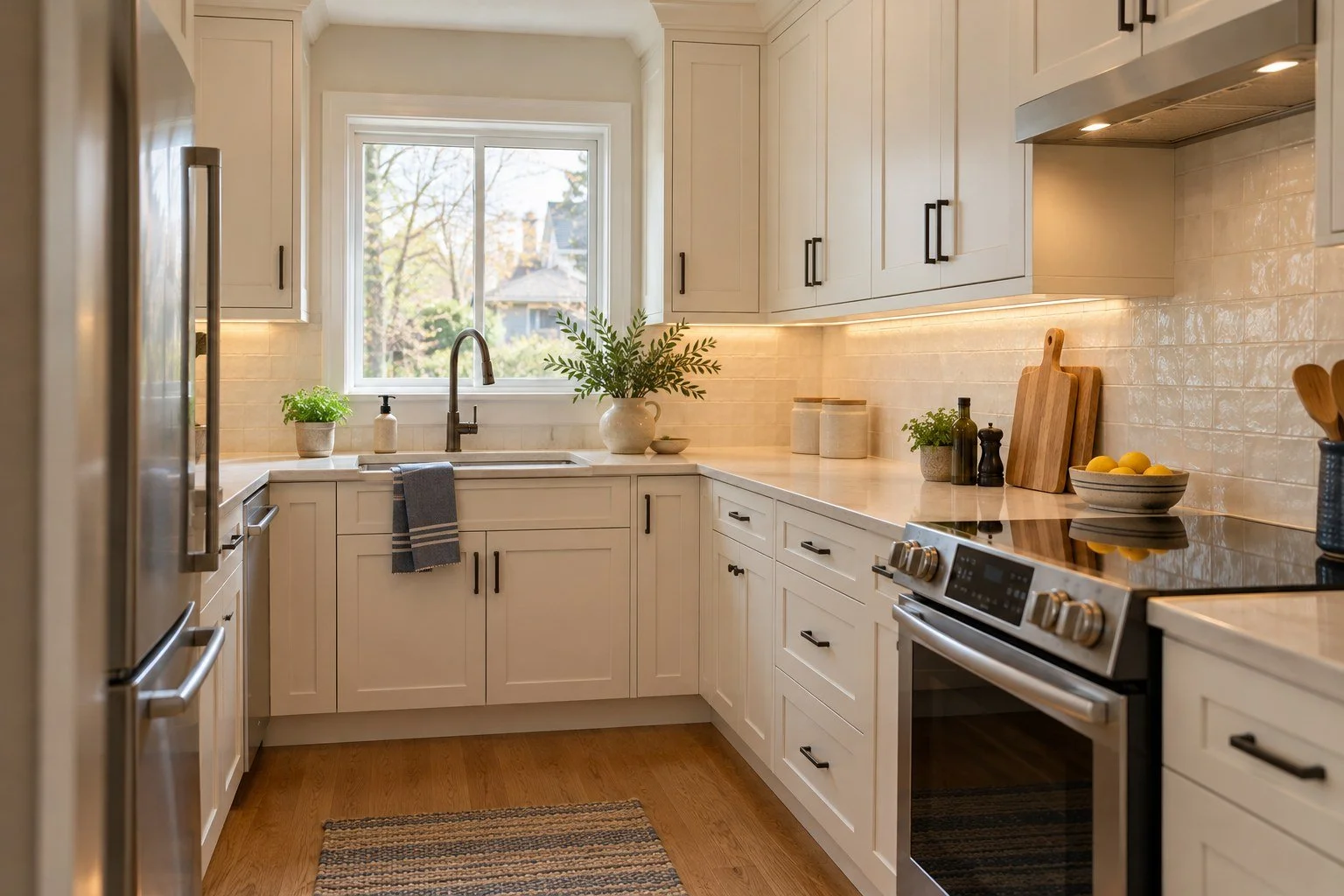
Before imagining a room stripped back to its walls, take a closer look at what you already have. Is the layout practical? Are the cabinets sound? Does the floor need replacing, or would refinishing suit its condition?
Updated hardware, lighting, fixtures or a backsplash can be worth exploring when the underlying space still serves you well. In a bathroom, consider how the mirror, lighting, storage and finishes work together, alongside the condition of the plumbing and ventilation.
Kitchen and bathroom improvements can support buyer appeal, but the right scope depends on the home. Materials and workmanship should suit the property and its neighbourhood. The aim is a coherent, useful room—not simply a more expensive one.
to make your home feel different.
Care you can see.
Care you can feel.
A beautiful finish is only part of a well-cared-for home. Roofing, flashing and drainage help keep water away from the structure. Insulation, air sealing and ventilation work together to influence comfort and the way the building performs.
Natural Resources Canada emphasizes treating the house as a connected system. An improvement to one part can affect another, so changes should be planned together. Investigating moisture or ventilation concerns belongs ahead of new cosmetic finishes.
Outside, a cared-for entrance can set a welcoming tone. Look at the condition of the door, steps, railings and approach. Sometimes the most useful first improvement is addressing something that has been waiting for attention.
Start with your home.
Then your priorities.
Walk through your home and make two lists: what needs attention and what you would enjoy changing. The Canadian Home Builders' Association recommends distinguishing must-haves from nice-to-haves before setting the scope of a renovation.
Think about your time horizon, too. If you expect to stay, an improvement's daily usefulness may matter more than its resale effect. If selling is closer, a local real estate professional or qualified appraiser can help you understand what buyers in your area are likely to value.
Renovation cost and added market value are different things. Location, condition, comparable sales and market conditions all influence what a property is worth.
A clear scope and a realistic budget let you choose a sensible first step. You can make a home feel more finished, more functional and more like yours—one considered improvement at a time.
Further reading · Appraisal Institute of Canada: How to Value Your Renovations · Natural Resources Canada: How Your House Works · CHBA: Before Starting a Renovation · CMHC: Your Home Value
This guide offers general information; the effect of any improvement on resale value depends on the property and local market.